Skip to content
EnglishFrançais
Cross-case - Service Portal Digital Experience Powered By Jahia

SPW

The Public Service of Wallonia built its site factory with Jahia

How SPW turned website creation from a project that took a year or more into a service its departments can launch in a few months.

Background

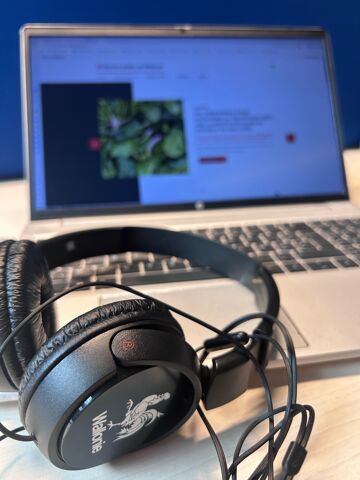
Headphones with the Wallonia logo in front of a laptop
Photo ©SPW

The Public Service of Wallonia (SPW) is the administration of the Walloon Region in Belgium. It covers the region's major policy areas, including mobility, agriculture and the environment, energy and housing, the economy and employment, local government, and finance.

Each policy area has its own main thematic portal, surrounded by more specialized sites and campaign sites. Together, they serve citizens, businesses, municipalities, and professionals.

For people in Wallonia, these sites are often their first point of contact with the administration. They carry official information, online procedures, and public campaigns, and their clarity directly shapes the Region's image.

All of SPW's Jahia sites are managed by the Website team at SPW Digital, within its Multichannel service center. This support and development team, dedicated to the Jahia site factory, is responsible for:

  • Maintaining and evolving the shared Jahia environments.
  • Delivering the services built around the shared Jahia environments and continuously improving their quality, including consulting, support, analysis, implementation, maintenance, and website evolution.
  • Ensuring efficient industrialization and pooling in website development on Jahia, while staying aligned with the enterprise architecture and complying with standards and security principles.
 

2009
Jahia platform in place since

~80
sites managed on the platform

12 to 13M
visits per year across all sites

The challenge

For years, creating a website at SPW was not an editorial project. It was a public procurement process.

A department that wanted a site had to list its requirements, write a specification, publish the tender, then wait for bids. Months went by before the first line of content was written. Sometimes a full year passed before the project really got started.

This delay had an effect no one had anticipated. Departments in a hurry went elsewhere for their sites, each with its own vendor, technology, and hosting provider. An inventory carried out in 2017-2018 counted nearly 300, with all the maintenance burden and security risk that entails. What needed fixing, then, was both the number of sites and the time it took to get one.

"There was a time when, to build a site, the first thing we were asked was to list your requirements and write a specification. We published it and received bids. It took months and months, and sometimes, a year later, we still hadn't even started."
- Kevin Allard, Head of the Website team and Product Owner of the site factory, SPW Digital, Public Service of Wallonia (translated from French)

Why Jahia

Jahia came to SPW through a project that never saw the light of day.

Around 2009, the administration selected the platform for Agoracité, an initiative to give Walloon municipalities their own websites. Agoracité never launched, but Jahia stayed. The solution met the technology standards SPW wanted to roll out across the board: a Java foundation aligned with its technical environment, and a level of security already proven in large organizations.

A third strength would prove decisive: native multisite. A single installation could run multiple sites, something very few solutions offered.

Deployment changed completely. Before, one site meant one server, and every new project added its own installation. With Jahia, SPW Digital installs the platform once, hands it over to an internal team, then connects every new site to it.

The platform then proved itself year after year. It was never rebuilt from scratch: the same installation grew over time, absorbing new projects as well as sites inherited from other technologies. Jahia thus became SPW's main web content management platform.

"Our idea was to have a cross-cutting platform where we could manage several sites at once, on the same server, in the same place. Very few solutions allowed that."
- Kevin Allard, Head of the Website team and Product Owner of the site factory, SPW Digital, Public Service of Wallonia (translated from French)

The solution

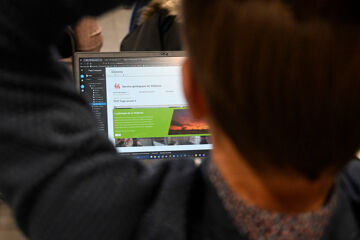
Editing an SPW website in Jahia Page Composer
Photo ©SPW

SPW Digital didn't try to force the platform on anyone. It made it simpler and faster than any other option, so that it became the obvious choice.

That is the principle behind the site factory: a catalog of shared modules reused from one site to the next, and a design system within which each team builds its pages without leaving SPW's visual framework. Creating a site no longer requires writing code: you pick a template, activate the modules, and set up the header, the footer, and the first sections.

Governance followed. A committee reviews every request, checks whether a new site is justified, or points the department toward an existing one. SPW Digital owns the technology, the departments own the content. Contributors are trained on the CMS and have clearly defined roles, from administrator to contributors limited to a single area, which they assign themselves. A support desk answers on business days, and a community of 120 to 130 contributors shares practices in a dedicated space.


Results

Site

A public site live within a few months, as soon as the content is ready.

Paint

Dispersion has reversed. SPW now creates almost no new sites. Instead, it brings back the ones that remained outside, migrates them, and sometimes merges them into an existing portal. The web estate has shrunk from nearly 300 sites to about a hundred, around 80 of which run on the Jahia site factory.

A consistent image. A few years ago, two SPW sites had almost no visual connection, even though they belonged to the same administration. The design system restored that common thread.

Liens

A service, not a project. Departments focus on their content without managing infrastructure, licenses, or developers. They are supported by a group that brings together all the expertise needed to set up a site (digital, communications, UX/UI, user focus, and more).

Kevin Allard, Head of the Website team at SPW Digital

"The result where the business saw a clear difference, and the reason we became indispensable, is how fast we can set up a site and put it online."

— Kevin Allard, Head of the Website team and Product Owner of the site factory, SPW Digital, Public Service of Wallonia (translated from French)

What this project shows

A fragmented web estate is rarely fixed by mandate.

Departments choose whatever solution lets them move forward. So the best lever is not to impose the shared platform, but to make it the simplest and fastest option.

Here, Jahia serves as a shared foundation. SPW Digital controls the technology, security, and visual consistency in a single environment, while each department publishes within its own scope, with its own roles.

That leaves room to progress by absorption rather than through a large-scale program. Each recovered site joins the shared foundation at its own pace, with no service interruption and no wholesale redesign.

Managing a web estate scattered across multiple technologies, vendors, and departments?

See how Jahia helps public administrations and large organizations consolidate their web platform, shorten time to launch, and stay in control of their data.

Talk to a Jahia expert