
NASA is publishing from space. With Jahia.
Delphine Morisset
"Hello, World"
On April 2, 2026, Commander Reid Wiseman photographed Earth from the window of the Orion spacecraft. Artemis II had just left Earth’s orbit, heading to the Moon for the first time since 1972. The image, 5,568 × 3,712 pixels, taken right after the translunar injection burn, went live on nasa.gov minutes later, under a title that said everything: "Hello, World."
Those are the two words you write when you test a program for the first time, the first signal sent to check that the connection is working, that everything is running as expected.
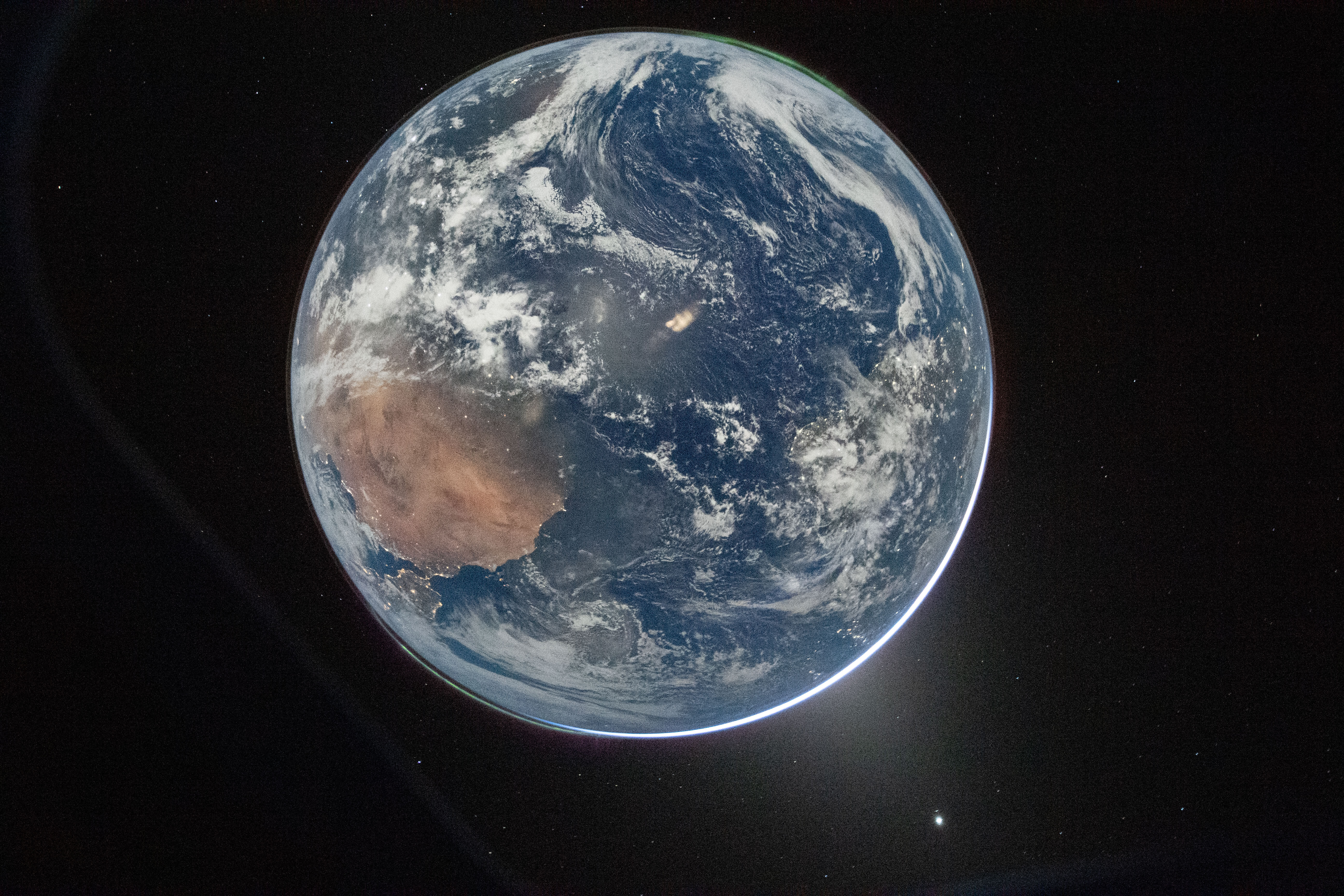
Image Credit: NASA/Reid Wiseman
What you don’t see behind the photo
Within minutes, that image was available in full resolution to millions of people around the world. What you don’t see is the infrastructure that makes it possible: the raw file coming in, being processed, going live, and being distributed across every channel at once.
The Space Telescope Science Institute (STScI), which operates the James Webb Space Telescope for NASA, ESA, and CSA, uses Jahia to manage the distribution of its scientific content. Researchers, engineers, communications staff, and press teams all publish on the same platform, at the same time, without getting in each other’s way, even during unpredictable traffic spikes, at the exact moment the entire world is watching.
An enterprise CMS is a ten-year commitment
An enterprise CMS is a ten-year commitment. That’s how long it takes for a platform to prove its true value: absorbing years of growth, new markets, new teams, new use cases without breaking down.
NASA has no margin for error. When millions of people are waiting for an image from space, the infrastructure has to hold. It does.
Artemis II returns to Earth on April 10. Between now and then, more images will be published from space.
Discover
Related resources
 Blog
BlogMigrate from Adobe AEM to Jahia: the 5 Steps of a Free AI-Powered Migration
Free assessment, AI-powered rebuild, validation, redirects and go-live: the 5 steps to migrate from Adobe AEM to Jahia in 1 to 3 months, run by Jahia experts.
 Blog
BlogBest Java CMS in 2026: what to check before you choose a platform
What to check before you choose the best Java CMS: the extension surface, modularity, licensing and deployment, plus the questions to ask every vendor.
 Blog
BlogOmnichannel CMS and tools for your strategy
An omnichannel strategy connects every channel a brand uses around the customer. What it requires, the families of omnichannel tools from CMS to CDP and how to choose an omnichannel CMS.
 Blog
BlogOpen Source CMS: What is it and do I need it?
What open source really changes for a CMS: licence and cost, control over the code, security and update duties, community, and when it is the wrong choice.
 Blog
BlogMulti-site CMS for insurance: from service portal to performance portal
A customer portal that answers requests can, once connected to the CRM, become a lever for the relationship. What a multi-site CMS for insurance must do to get there and how to choose one.
 Blog
BlogSite factory: definition and 5 steps to build one
What a site factory is, how it differs from a multisite setup, its benefits, how to choose the right technology and the 5 steps to build and run your own.
 Blog
BlogWhat is the content lifecycle?
The content lifecycle is what your content goes through from conception to deletion, in 6 stages. Each type of content, whether it's a white paper or a video, goes through this lifecycle, but differently.
 Blog
BlogJahia from the Field: jContent 3.7.1 simplifies Content Editor
What jContent 3.7.1 changes for editors and developers: a reorganized Content Editor, simpler translation and new APIs.
 Blog
BlogChoosing the Best Multilingual CMS: the 9 Criteria That Matter
Translated or shared fields, per-language rights, language lifecycle: the nine criteria to weigh before choosing a multilingual CMS.